As we go through the sermon series, our children are learning the same lessons as the adults, in their Bible classes. Here, you’ll find the week to week outline that goes along with the adults lesson.
Week 20: King Solomon and the Temple
(3-01-26)
Introduction Activity:
Gather a magnet, small metal object (paperclip) and a barrier (wood block).
Show how the magnet (God) easily pulls the paperclip(us). Place the barrier (distraction) between them and show how the connection weakens.
Discuss how today we are going to learn about King Solomon and how he was distracted by wealth and women and turned to idol worship.
At the Table:
Child reads 1 Kings 4:20-28. What do the specific details about the amount of food and the amount of animals tell us about Solomon’s life?
Child reads 1 Kings 8:12-21. Who wanted to build the temple? Who actually built the temple?
Child reads 1 Kings 10:26-29. What does v. 27 tell us about Solomon’s wealth?
Child reads 1 Kings 11:1-8. What does v. 3 tell us his wives did? What did Soloman do as a result?
Child reads Deuteronomy 17:14-7. Thinking about the verses we read about Soloman, what did he do as king that was a warning to the people in these verses?
Activity:
Review with children what the words permanent and temporary mean. Call out items that are either permanent (God’s love, His Word) or temporary (money, toys). If it is permanent, children freeze. If it is temporary, childs “melt” to the floor.
Discuss how Soloman spent his life chasing things that “melted away”, forgetting to hold onto the one thing that lasts forever.
Prayer:
Remind children that we are talking to God and our bodies and voices should be respectful
Teacher leads, specifically mentioning topics from today’s lesson
Each child is encouraged to take turns and contribute
Teacher closes prayer after children have shared their prayers
Week 19: King David
(2-22-26)
Introduction Activity:
Get 2 boxes-wrap one beautifully and make the other box messy and dirty. Wrap trash inside the beautiful box and place a treat (stickers, candy, etc.) inside the messy, dirty box.
Ask the kids which box they would like to receive and then unwrap each box.
Ask kids to make comparisons between the boxes and the contents and what God looks for vs. what the world looks at.
At the Table:
Child reads 1 Samuel 16: 6-13. What part of a person does God see?
Adult briefly recaps the story of David using a sling and rock to defeat Goliath.
Adult reads 1 Samuel 17:41-47. Who gave David confidence that he would defeat Goliath?
Adult explain that although David did many good things, he also sinned. But even during his problems, he never turns away from trusting and following God.
Child read 2 Samuel 22:21-25.
Activity:
Give each child a washable marker and have them write or draw on their hands a time when they did not make a good choice. (lying, not listening to parents, not nice to another person, etc.)
Lead a short prayer asking for God’s help to follow Him better.
Then give each child a baby wipe or have them wash their hands in the sink, scrubbing off the words or drawings of their bad choice.
Remind kids that David trusted God would restore his relationship with Him after he did wrong.
Prayer:
Remind children that we are talking to God and our bodies and voices should be respectful
Teacher leads, specifically mentioning topics from today’s lesson
Each child is encouraged to take turns and contribute
Teacher closes prayer after children have shared their prayers
Week 18: The Monarchy Established
(2-15-26)
Introduction Activity:
Fill a jar with beans or M&Ms. Have each child write down a guess of how many are inside the jar. Have them talk as a group and come up with a group guess for the jar. Then, reveal how many items are in the jar.
Often, the individual first guess is closer than the group’s guess because people change their answers to fit in. Explain that the Israelites let other nations change their thinking about what they knew was right and that God was enough to meet their needs.
At the Table:
Child reads 1 Samuel 8:4-8. What did the people ask from Samuel?
Child reads 1 Samuel 8:9-18. What are some of the things Samuel warned the people that the king would want from them?
Child reads 1 Samuel 8:19-22. What was the people’s response?
Adult reads Psalm 72. What are some of the examples from the text that tell us what a good king should do?
Activity:
Gather a jar of water, salt and a raw egg. Explain that the egg represents someone who is feeling down or is in need. In the plain water, the egg sinks to the bottom.
Add salt to the water and stir. As the salt (kindness) dissolves, the egg begins to float to the top.
A good king/leader uses their words and actions to lift others up instead of letting them sink.
Prayer:
Remind children that we are talking to God and our bodies and voices should be respectful
Teacher leads, specifically mentioning topics from today’s lesson
Each child is encouraged to take turns and contribute
Teacher closes prayer after children have shared their prayers
Week 17: Job
(1-18-26)
Introduction Activity:
Get a large blanket or sheet and a soft ball to bounce on it. Have kids hold the edges of the blanket and try to bounce the object 10-20 times without it falling off. Introduce “challenges” like hopping or spinning to represent life’s difficult moments.
Discuss how life has many ups and downs. Even times when things are bouncing around and feel hard, we can choose to hold on to God.
At the Table:
Child reads Job 1:1-4. What does this tell us about Job?
Child reads Job 1:13-19. What happened to Job’s family and things?
Discuss in life that people often ask why bad things happen to good people.
Child read Job 28: 28. What does this verse say that God wants from us? Remind kids that to fear God means to respect and be in awe of Him, not frightened.
Activity:
Get a tomato or a picture of a tomato. Ask kids for facts about the tomato. (It is red, it has seeds, it’s a fruit). The facts are an example of Knowledge.
Ask the kids if they would put the tomato in a fruit salad. Most will say “no” even though a tomato is technically a fruit.
Explain that knowing a tomato is a fruit is knowledge. Knowing not to put it in a fruit salad is wisdom. We can know a lot of facts about God and the Bible, but we have to have wisdom to use them correctly.
Discuss some examples in our lives of applying wisdom (e.g. listening to others, ways to be kind and patient with others, etc.)
Prayer:
Remind children that we are talking to God and our bodies and voices should be respectful
Teacher leads, specifically mentioning topics from today’s lesson
Each child is encouraged to take turns and contribute
Teacher closes prayer after children have shared their prayers.
Week 16: The Period of the Judges
(1-11-26)
Introduction Activity:
Present various scenarios (e.g., getting a good grade, winning a soccer game, having a nice dinner). For each, have the kids identify what they did (e.g., studied, practiced, set the table) and what God provided (e.g., their brain, their body, the rain for the food to grow).
Emphasize that while we work hard, God is the one who “gives you the ability to produce wealth”.
At the Table:
Adult read Deuteronomy 8:11-20. What problem did the people have? What did God say would happen if the people went after other gods?
Child reads Judges 2:11-20. Even after the Lord brought the people out of Egypt, who did the people serve instead of God? When God gave them judges, what did the people do?
Child reads Judges 21:25. Do people today do “what is right in his own eyes?” Why is this a problem?
Activity:
Gather a standard ruler and make rulers out of cardboard strips, enough for each child to have one. On the cardboard ruler strips, mark with 1 inch, 2 inch, etc. but at incorrect intervals.
Give each child a “fake” ruler and ask them to measure the same object (book, table, bulletin board) and call out their measurements. They will all give different measurements.
Ask them who is right. They will likely say that their ruler says so. This is what it means to do “what is right in your own eyes”.
Explain that when we decide what is right or wrong based on our feelings, it is like a broken ruler; there can be a lot of variation. Show the real ruler (correct measurements) and explain that it is like God’s Word-the one true standard that never changes.
Prayer:
Remind children that we are talking to God and our bodies and voices should be respectful
Teacher leads, specifically mentioning topics from today’s lesson.
Each child is encouraged to take turns and contribute
Teacher closes prayer after children have shared their prayers
Week 15: The Conquest and Promised Land
(12-28-25)
Introduction Activity:
Get a glass, a paper towel and a shallow dish of water. Push the paper towel into the bottom of the glass. Turn the glass upside down, making sure the paper towel does not fall out.
Put the inverted glass straight down into the shallow dish of water. Lift the glass straight out the water and the paper towel should still be dry.
Explain that the invisible air inside the glass protected the paper towel from the water. God is all around us like the air; His great power and protection are real and constant. He protected the Israelites in times of battle when they followed his directions.
At the Table:
Adults read Exodus 17: 8-16. Who won the battle? What did Israel do after the battle?
Kids read Deuteronomy 9: 1-3. How are the Anakim described? How will God handle the Anakim before Israel goes in?
Kids read Joshua 11: 21-23. What happened to the Anakim? What happened to the land?
Discuss why it was important for Joshua and the Israelites to follow God’s directions.
Activity:
Give the kids a small puzzle (12-24 pieces) to put together as a group. Before giving them the puzzle, hide one middle piece. Have kids complete the puzzle.
Ask the kids how the puzzle looks. Explain it does not look right because it’s missing something important. We are like the incomplete puzzle-if we obey God in some areas, but not in others, we are missing the piece of obedience.
Give kids the missing piece and explain that when we choose to obey God in all things, our lives become complete and full.
Prayer:
Remind children that we are talking to God and our bodies and voices should be respectful
Teacher leads, specifically mentioning topics from today’s lesson
Each child is encouraged to take turns and contribute
Teacher closes prayer after children have shared their prayers
Week 14: The Tabernacle and Ark of the Covenant
(12-14-25)
Introduction Activity:
Give each student a connect the dots activity. Have them guess what design they are making.
After each kid completes the activity, share that they have created a tabernacle, a tent where God lives. He wanted to be among his people! Today we will learn about the Tabernacle design and items in the Tabernacle such as the Ark of the Covenant (God’s promise kept in a box).
At the Table:
Have kids read Exodus 25: 8-9. What does God want the people to create? Why?
Have kids read Exodus 25: 10-16. God gives us a lot of details about how He wants the Ark constructed, why? Can you think of other times in the Bible we are given lots of details about the design of something? (Creation, how Noah was to build the ark, etc.)
Adult teacher explains that the next 2 chapters give us LOTS of details about how God wants the Tabernacle and the Ark of the Covenant built.
Kids read Exodus 27: 21. Notice how God includes who is going to care for the Tabernacle and he wants it to last through generations.
Activity:
Get a small cardboard box-”Giving Box”, index cards, markers and items to decorate the index card.
Remind kids that the people gave their best materials and used their special skills to build God’s dwelling place.
Give each kid at least 1 index card. Have them write an item or special skill that they will give to God (time, money, talent-teaching, caring for others, singing, encouraging others, feeding people, etc.)
Place decorated index cards in the Giving Box.
Prayer:
Remind children that we are talking to God and our bodies and voices should be respectful
Teacher leads, specifically mentioning topics from today’s lesson
Each child is encouraged to take turns and contribute
Teacher closes prayer after children have shared their prayers
*Connect the Dot activity page from sundayschoolbiblelessonsforkids.com-Lesson 4-Pattern for the Tabernaclehttps://www.sundayschoolbiblelessonsforkids.com/uploads/5/5/4/9/55490335/tabernacle_connect_the_dot_sheet.pdf
Week 13: The Law
(12-07-25)
Introduction Activity:
Get to 2 clear glasses of water, salt, spoon, and 2 eggs.
Label one glass “self-focused life” and the other “God focused life” and fill with water. Tell kids the egg represents us as people.
Place one egg is the “self-focused life” glass. Notice how it sinks to the bottom, heavy with sin. It stays at the bottom separate and unchanged by its surroundings.
Put several spoonfuls of salt into the “God focused life” glass and stir until it is mostly dissolved. The salt is like having God in our lives, shaping our character. Place the other egg in the “God focused life” glass-it will float! Notice how the salt has changed the density of the water, allowing the egg to rise. This shows that when God is in our lives, our character can be transformed and we can rise above the influences of the world.
At the Table:
Have kids read Deuteronomy 30: 15-16. What were the people told to do?
Have kids read Deuteronomy 30: 17-19. What were the consequences?
Have kids read Deuteronomy 30: 20. Why should the people listen and follow God?
Adults read 1 Timothy 1:8-11. Discuss how God’s Law is a useful tool when used right.
Activity:
Get an empty medicine bottle or box. Point out to the kids that there are directions on how to use the medicine safely and a warning label. Explain the warning label is to keep us safe.
God gave us his Law/rule which is like his warning label. The Law’s main job isn’t to make us feel bad, but to warn us of the danger of sin and encourage us to make better choices that don’t separate us from God.
Prayer:
Remind children that we are talking to God and our bodies and voices should be respectful
Teacher leads, specifically mentioning topics from today’s lesson
Each child is encouraged to take turns and contribute
Teacher closes prayer after children have shared their prayers
Week 12: Out of Polytheism, Into Monotheism
(11-23-25)
Introduction Activity:
Get 2 clear jars. In 1 jar, place a toy figure and label it monotheism. In the other jar, label it polytheism and place several small objects/toys to represent different gods. (seashell-sea god, farm animal-earth/harvest god, heart shaped object-love god).
Explain that in the monotheism jar, the worship is directed at one, single God. In the polytheism jar, each object represents a different god with a different job.
At the Table:
Adults read Exodus 20:1-6.
Discuss what God commanded the people to do
Kids read 1 Kings 18:20-21. What did Elijah say the people had to choose between?
Kids read Acts 17:22-23. What strange thing did Paul notice in Athens?
Adults read Acts 17: 24-31.
Discuss how some people in the world may still believe in polytheism, but only God is deserving of our worship.
Activity:
Give each kid a blank piece of paper and crayons
Have them draw or write at least 5 things that people might prioritize God. Ex: playing video games, sleeping, being on their cell phone, money
Have students share what they put on their papers. Then instruct students to make a large red X over each item. Discuss how we need to encourage each other to prioritize God first.
Prayer:
Remind children that we are talking to God and our bodies and voices should be respectful
Teacher leads, specifically mentioning topics from today’s lesson
Each child is encouraged to take turns and contribute
Teacher closes prayer after children have shared their prayers
Week 11: Egypt and the Exodus
(11-16-25)
Introduction Activity:
Discuss that God’s family (Israel) were now in slavery in Egypt and Egypt is a land of many gods, each god considered a protector of something.
Examine the chart listing the plague, corresponding god and area it challenged. (You may wish to write a plague on one card and the corresponding god on another card to create a matching game.)
Discuss why you think that God had a plague that corresponded to an Egyptian god?
At the Table:
Adults read Exodus 7:1-7.
What does it mean when the Lord says “But I will harden Pharaoh’s heart”?
Kids read Exodus 7: 10-13, Exodus 7: 20-22, Exodus 8:6-7, Exodus 8:18-19 and Exodus 9:10-12.
What pattern do you see happening with the plagues and the Egyptian magicians? What does this tell you about who is more powerful-God or the Egyptian god?
We read in the Bible that the Lord hardened Pharaoh’s heart, but also that Pharaoh hardened his own heart. Do people today still harden their hearts?
Activity:
Gather a dry sponge, a rock, a small clear bowl and a cup of water.
Hold up the sponge and the rock. Ask kids which object represents Pharoah’s heart.
Pour water over the rock, noting how it does not absorb the water. Pour water over the sponge, noting how the sponge soaks up the water.
Discuss how we have a choice- a soft heart, soaking up all of God’s words and wisdom or a hard heart like Pharaoh’s, which doesn’t let God’s message in.
Prayer:
Remind children that we are talking to God and our bodies and voices should be respectful
Teacher leads, specifically mentioning topics from today’s lesson
Each child is encouraged to take turns and contribute
Teacher closes prayer after children have shared their prayers.
Week 10: The Patriarchs and Their Worship
(11-09-25)
Introduction Activity:
Write various scenarios on an index card for when someone might need help. (ex. Your dog runs away; You are having a hard time understanding how to do division in math class; your friend hurts your feelings, etc.)
Give each child a card and have them read aloud the problem. If another child has an idea of WHO can help them with the problem, they will pick up a “phone” (make a paper phone, use a toy phone or use hand sign ) to call their friend and help them out.
Discuss how God is always ready and willing for us to call on him when we are in trouble or in times of thankfulness.
At the Table:
Give each child a verse to read: Genesis 13:4, Genesis 21:33, Psalm 99:6 and Psalm 50:15.
Create a list of each of the patriarchs mentioned. What does the Bible record each of them doing in the verses?
Activity:
Give each child a piece of paper and markers
Have each child write the letters C, A, L, L vertically down the paper, leaving room to write beside each letter
Have kids write a word or phrase for each letter that describes God or how we call on Him. Ex: C-calm, A-ask for help, L-love
Prayer:
Remind children that we are talking to God and our bodies and voices should be respectful
Teacher leads, specifically mentioning topics from today’s lesson
Each child is encouraged to take turns and contribute
Teacher closes prayer after children have shared their prayers
Week 9: Abraham
(11-02-25)
Introduction Activity:
Gather items you may wish to pack for a trip. (Water, food, map, sunblock, pillow, stuffed animal, Bible, swimsuit, hiking boots, medicine etc.) Have at least 10 different items to be chosen from.
Divide kids into 2 teams. Have teams pick 3 items they would most like to take on a trip. (Do not tell them what type of trip it is)
After each team has made their 3 selections, give time for them to explain their choices.
Discuss how Abram was asked to follow God and travel to a new land without knowing what he would need for the journey. Discuss how Abram and his family had to trust in God’s promises.
At the Table:
Have children read Genesis 12: 1-3.
What promises does God make to Abram?
Have adults read Genesis 12: 4-9.
What are the names of places that Abram and his family traveled? What did he do when he reached those places?
Adult Genesis 15: 1-6.
What BIG promise did God make Abram? What object in the sky did God say “so shall your descendents be”?
Activity:
Before class begins, hide paper or plastic stars around the room.
Have students try to seek out all the stars you have hidden in the room.
Invite students to contemplate God’s promise about Abram’s descendants and the stars in the skies
Prayer:
Remind children that we are talking to God and our bodies and voices should be respectful
Teacher leads, specifically mentioning topics from today’s lesson
Each child is encouraged to take turns and contribute
Teacher closes prayer after children have shared their prayers
Week 8: The Three Rebellions
(10-26-25)
Introduction Activity:
Play “Would you rather…” For example, “Would you rather fight a battle with a lightsaber or Thor’s hammer?” “Would you rather fight with Superman or Batman?” “Would you rather have super speed or invisibility?”
Ask who is their favorite superhero and why.
Discuss how each superhero has some kind of weapon to use against enemies and some kind of defense they can use.
At the Table:
Review the 3 rebellions we have learned about the consequences of those rebellions. Adam and Eve wanting all knowledge right now; have to leave the Garden, must work, pain in childbirth. People continue doing evil on the earth; the world is destroyed except for Noah and his family. Build a tower; God gives them multiple languages to confuse them.
Read Ephesians 6:12
Discuss: Who does the writer say our struggle is with?
Activity:
Write down lies (You aren’t good enough. You aren’t smart. etc.) on slips of paper and place around the room.
Turn off the lights. Use a flashlight to find the slips of paper. Have kids read the lies.
Discuss: How does reading the Bible, praying and learning about God help us to defeat the forces of darkness.
Prayer:
Remind children that we are talking to God and our bodies and voices should be respectful
Teacher leads, specifically mentioning topics from today’s lesson
Each child is encouraged to take turns and contribute
Teacher closes prayer after children have shared their prayers
Week 7: The Tower of Babel
(10-19-25)
Introduction Activity:
Divide kids into pairs or small groups. Give each group spaghetti noodles and marshmallows.
Instruct the groups to build the tallest structure they can in 5 minutes WITHOUT talking to their teammates. Set the timer for 5 minutes. If groups talk, they must start over.
Discuss: How did you communicate with your teammates without talking? What feelings did you have about the lack of clear communication?
At the Table:
Read Genesis 11:1-9
Discuss: What did God do when he discovered the people building a tower?
Continue reading in One BIG Family about Nimrod and the Tower of Babel
Activity:
Make a copy of the Tower of Babel word search for each child
Give class time to complete the word search activity. They can help each other find the words, but they cannot speak the same language in order to help each other.
Do you think giving the people multiple languages was a good punishment?
Prayer:
Remind children that we are talking to God and our bodies and voices should be respectful
Teacher leads, specifically mentioning topics from today’s lesson
Each child is encouraged to take turns and contribute
Teacher closes prayer after children have shared their prayers
Week 6: Noah and the Flood
(10-12-25)
Introduction Activity:
Create a simple obstacle course in the room. Blindfold 1 kid and have their partner give them directions to navigate the obstacle course. Have other children call out misleading directions.
With the next pair, have the partner on the other side give out clear directions. No other kids should speak.
Discuss: God is going to give Noah precise instructions on what to do to survive the flood. We must learn to listen to God and follow his directions for our lives.
At the Table:
Read Genesis 6:11-14.
Discuss: Why did Noah build the ark?
Read Genesis 8: 1-5 and Genesis 8: 20-22
Discuss: What did Noah do when he got off the ark? What was God’s response?
Continue reading in One BIG Family text
Activity:
Bring several spices and cooking seasonings for kids to smell. Have kids guess what each seasoning is.
Discuss how Genesis 8:21 states that “the Lord smelled the soothing aroma”. What do we do today that is a soothing aroma to the Lord?
Prayer:
Remind children that we are talking to God and our bodies and voices should be respectful
Teacher leads, specifically mentioning topics from today’s lesson
Each child is encouraged to take turns and contribute
Teacher closes prayer after children have shared their prayers
Week 5: Genesis 6
(10-5-25)
Introduction Activity:
Give each child a small cup filled with water. Instruct them to hold their arm out straight for several minutes. You may wish to see who can hold the water the longest without spilling
Discuss how sin is like the cup of water; it starts out as a small, manageable problem, but, over time, becomes an overwhelming and destructive burden.
At the Table:
Have kids read Genesis 6:5-7.
Discuss: Why has the Lord decided to destroy the earth?
Have kids read Genesis 6:8-10.
Discuss: What does is mean to “find favor in the eyes of the Lord?”
Discuss: How is Noah described in the Bible?
Thinking question: Are other people in the Bible described as having “found favor in the eyes of the Lord”. Do you think these people are perfect or trying really hard to do the right thing?
Activity:
Mark a straight line on the floor with tape.
Have kids walk on the straight line with eyes open. Teacher or friend can be on other end of line to encourage participation and correct movement
Next, have kids try to walk the straight line with their eyes closed. Or spin the child several times and have them walk the line.
Discuss how sin can confuse us and keep us off the line to God and his ways.
Prayer:
Remind children that we are talking to God and our bodies and voices should be respectful
Teacher leads, specifically mentioning topics from today’s lesson
Each child is encouraged to take turns and contribute
Teacher closes prayer after children have shared their prayers
Week 4: Genesis 3 and “The Fall”
(9-28-25)
Introduction Activity:
Divide children into 2 teams. Give each team a roll of toilet paper on a stick. One team member holds the stick, the others unravel the TP. The first team to unravel the TP first is the winner.
All this TP around is a mess. Sin makes things messy.
At the Table
Discuss : what is sin. (God said do this, but you did this instead) Ex: lying, cheating, hurting someone/animals, etc.
Children will read Genesis 3: 1-13
Discuss what Adam and Eve did that was a sin. (Wanted to know everything all at once and NOT by God’s plan) Then they lied. Can other people/things lead us to sin?
Adults read Genesis 3: 14-24
Were there consequences to their sin? Discuss.
Activity:
Write scenarios on index cards. Ex: Someone pushes you off the swing on the playground, Your mom asks to help set the table, You feel frustrated and want to say bad words, Your brother is hogging the TV and your favorite show is on, etc.
Each child will select a card and act out the “Not God’s way” or “God’s Way” to respond to the scenario
Prayer:
Remind children that we are talking to God and our bodies and voices should be respectful
Teacher leads, specifically mentioning topics from today’s lesson
Each child is encouraged to take turns and contribute
Teacher closes prayer after children have shared their prayers
Week 3: God’s Family – Human and Divine (9/21/25)
Introduction Activity:
Create a list of jobs children can easily act out and write 1 job on a slip of paper EX:firefighter, chef, teacher, vet
Have each child pick a slip of popper and act out the job on the paper. Other children will try to guess their job.
Discuss how different people have different jobs and have children list people they know and jobs that they do
At the Table:
Have children read Deuteronomy 32:7-9 and Job 38: 4-7
Adults read Psalm 82.
Remind children that God is our Leader/”Boss” but He has given jobs (rule and authority) to human and spiritual beings.
“Does everyone always make good choices?” Discuss how this happens on earth and in heaven.
Review what we have read in One BIG Family and continue to read the corresponding pages to this lesson
Activity:
Teamwork challenge: Divide kids into 2 teams
Write simple challenges on sticky notes: 20 jumping jacks, 10 hop on 1 foot, 30 backward steps, etc.
Each child reads their sticky note, completes the challenge and then tags the next person on the team. You can set a timer to add another layer of difficulty/fun.
Discuss how it may be hard for 1 person to do all the challenges, but by working together it is achievable.
Prayer:
Remind children that we are talking to God and our bodies and voices should be respectful
Teacher leads, specifically mentioning topics from today’s lesson
Each child is encouraged to take turns and contribute
Teacher closes prayer after children have shared their prayers
Week 2: Creation and Eden (9/14/25)
Introduction Activity:
Give each child a piece of white paper and markers/crayons
Have each child draw a picture of themselves. As they draw, ask them, “does God only see the outside?”
Then have children write words of their “inside” characteristics . Ex: kind, funny, gentle, patient, etc.
At the Table:
Discuss how we are made in God’s image= He wants to see Himself in how we behave, treat others, do the right things, etc.
Have children read Genesis 1:26-31.
Adults read aloud Genesis 2: 7-23. Discuss how this section shows how God has a plan for when he created man and woman.
Introduce One BIG Family book. Read the first few pages. Let children know we will use this book to help our understanding over the next few weeks.
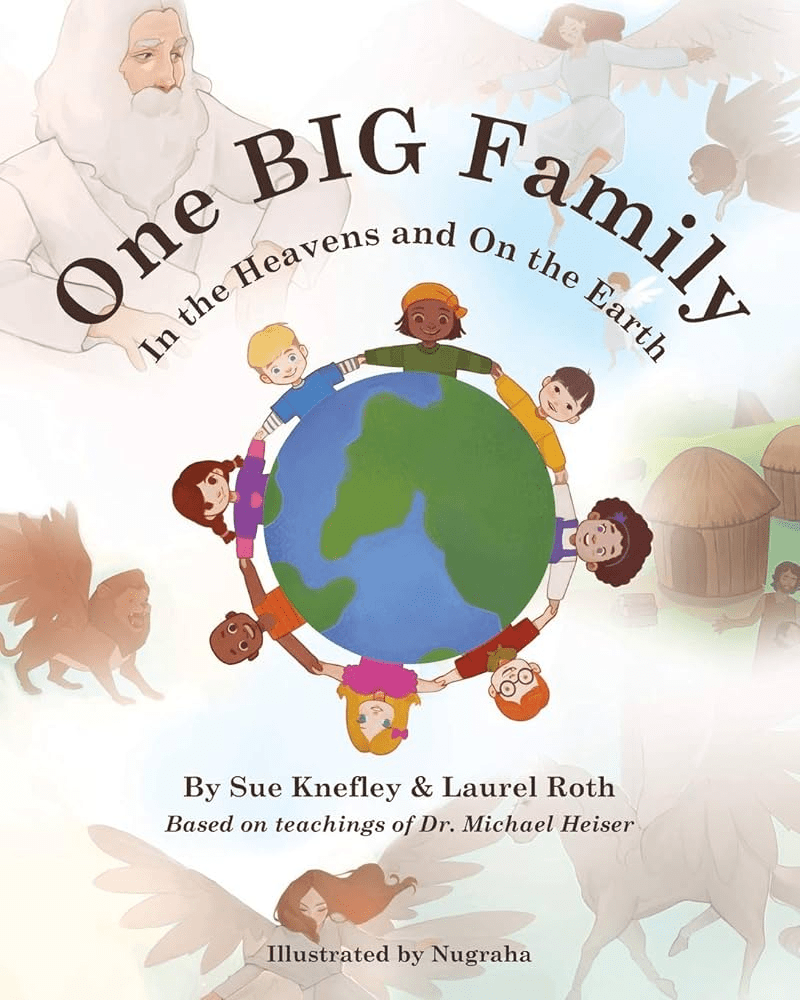
Discuss how we are made in God’s image, yet different, but all part of God’s family.
Activity:
Give each child a piece of paper
Lightly paint 1 hand of each child and have them place it on the paper
Have kids clean their hands and examine each other’s handprints
What do they notice is the same and different with the handprints?
Prayer:
Remind children that we are talking to God and our bodies and voices should be respectful
Teacher leads, specifically mentioning topics from today’s lesson
Each child is encouraged to take turns and contribute
Teacher closes prayer after children have shared their prayers
Week 1: Introduction (9/7/25)
Introduction Activity:
Play Follow the Leader Game. Give each child a chance to be the leader.
Explain that when we study the Bible, we are learning how to follow The Leader=God
At the Table:
Discuss why it can be hard to learn something new.
Discuss how you would feel if you had to relearn something you already knew to do. EX: the abc’s with a new letter, tying your shoes
Have children read 2 Timothy 3:16-17 and 2 Timothy 2:15, helping them sound out words. What reasons does the Bible give for needing the Bible?
Have children read Psalm 119:17-24. How does the writer feel and think about reading the Bible?
Discuss how all the kids, teens and adults will be learning about the same Bible topics each week for several months and how some thinking about these topics may be new for kids, teens and even adults!
Activity:
This can be done as a group or individually
You will need paper, markers or whiteboard and dry erase markers
Write the word Bible in the center of the paper/whiteboard
Children will write or draw reasons “why we should study the Bible” around the word Bible
Prayer:
Remind children that we are talking to God and our bodies and voices should be respectful
Teacher leads, specifically mentioning topics from today’s lesson
Each child is encouraged to take turns and contribute
Teacher closes prayer after children have shared their prayers
 The Divine Epic: God's story from creation to now.